Category: Business

  • Ben & Jerry’s co-founder resigns, claiming parent company Unilever ‘silenced’ its campaigning

    Ben & Jerry’s co-founder resigns, claiming parent company Unilever ‘silenced’ its campaigning

    Jerry Greenfield, co-founder of the Ben & Jerry’s ice cream brand, has stepped down from the company he started 47 years ago citing a retreat from its campaigning spirit under parent company Unilever.

    Greenfield wrote in an open letter late Tuesday night — shared on X by his co-founder Ben Cohen — that he could no longer ‘in good conscience’ remain an employee of the company and said the company had been ‘silenced.’

    He said the company’s values and campaigning work on ‘peace, justice, and human rights’ allowed it to be ‘more than just an ice cream company’ and said the independence to pursue this was guaranteed when Anglo-Dutch packaged food giant Unilever bought the brand in 2000 for $326 million.

    Cohen’s statement didn’t mention Israel’s ongoing military operation in Gaza, but Ben & Jerry’s has been outspoken on the treatment of Palestinians for years and in 2021 withdrew sales from Israeli settlements in what it called ‘Occupied Palestinian Territory.’

    Greenfield’s resignation comes five months after Ben & Jerry’s filed a lawsuit accusing Unilever of firing its chief executive, David Stever, over his support for the brand’s political activism. In November last year Ben & Jerry’s filed another lawsuit accusing Unilever of silencing its public statements in support of Palestinian refugees.

    ‘It’s profoundly disappointing to come to the conclusion that that independence, the very basis of our sale to Unilever, is gone,’ Greenfield said.

    ‘And it’s happening at a time when our country’s current administration is attacking civil rights, voting rights, the rights of immigrants, women, and the LGBTQ community,’ he added.

    Jerry Greenfield, left, and Bennett Cohen, the founders of Ben and Jerry’s founders, in Burlington, Vt., in 1987.Toby Talbot / AP file

    Richard Goldstein, the then president of Unilever Foods North America, said in a statement after the sale in 2000 that Unilever was ‘in an ideal position to bring the Ben & Jerry’s brand, values and socially responsible message to consumers worldwide.’

    But now Greenfield claims Ben & Jerry’s ‘has been silenced, sidelined for fear of upsetting those in power.’ He said he would carry on campaigning on social justice issues outside the company.

    The financial performance of the Ben & Jerry’s brand isn’t made public but Unilever’s ice cream division made 8.3 billion Euros ($9.8 billion) in revenue in 2024. Unilever is in the process of spinning off its ice cream division, however, into a separate entity which involves cutting some 7,500 jobs across its brands globally.

    Cohen and Greenfield founded the business in 1978 in Burlington, Vermont, where it is still based.

    NBC News has contacted Unilever for comment overnight but had not received any at the time of publication.

    This post appeared first on NBC NEWS

  • LimeWire acquires Fyre Festival, asking ‘What Could Possibly Go Wrong?’

    LimeWire acquires Fyre Festival, asking ‘What Could Possibly Go Wrong?’

    LimeWire, the filesharing service that set the internet ablaze in the 2000s before being shut down for copyright infringement, said Tuesday that is acquiring the rights to Fyre Festival.

    And it appreciates the irony.

    ‘LimeWire Acquires Fyre Festival Brand — What Could Possibly Go Wrong?’ the company titled its news release.

    LimeWire said it would “unveil a reimagined vision for Fyre — one that expands beyond the digital realm and taps into real-world experiences, community, and surprise.” The company offered no additional details about how the Fyre brand will be relaunched.

    For years, LimeWire operated as a competitor to fellow file-sharing platform Napster before being effectively shut down by a court ruling in 2010 after a judge ruled it had facilitated large-scale copyright violations. In 2022, Austrian brothers Julian and Paul Zehetmayr bought LimeWire’s intellectual property and turned it into an NFT service.

    Fyre Festival was a 2017 music festival that saw ticket buyers spend thousands of dollars for a weekend in the Bahamas only to be met with a logistics debacle that included portable bathrooms taking the place of regular toilets, and low-budget food options that betrayed promises of celebrity chef fare. Organizer Billy McFarland was later convicted of fraud and sentenced to six years in prison.

    “Fyre became a symbol of hype gone wrong, but it also made history,” LimeWire CEO Julian Zehetmayr said. “We’re not bringing the festival back — we’re bringing the brand and the meme back to life. This time with real experiences, and without the cheese sandwiches.”

    LimeWire said its bid was backed by Maximum Effort, the creative agency co-founded by the actor and entrepreneur Ryan Reynolds.

    “Congrats to LimeWire for their winning bid for Fyre Fest,” Reynolds said in the release. “I look forward to attending their first event but will be bringing my own palette of water.”

    This post appeared first on NBC NEWS

  • Convenience stores are eating fast-food chains’ breakfast

    Convenience stores are eating fast-food chains’ breakfast

    Fast-food restaurants are losing breakfast customers to convenience stores.

    Morning meal traffic to fast-food chains rose 1% in the three months ended in July, while visits to food-forward convenience stores climbed 9% in the same period, according to market research firm Circana.

    “Over the long run, convenience stores have taken share, really at foodservice overall, but the morning meal has been their strong suit,” David Portalatin, Circana senior vice president and foodservice industry advisor, told CNBC, noting the trend has largely been driven by what the group calls “food-forward convenience stores.”

    For decades, McDonald’s and its rivals have tried to lure consumers away from home to eat their early morning offerings, betting that convenience and unique items will win over diners.

    While fast-food chains have made some inroads, 87% of what consumers eat and drink in the morning comes from their own refrigerators or pantries, according to Portalatin. That leaves plenty of opportunity for fast-food chains — and anyone else who wants a slice of the breakfast pie.

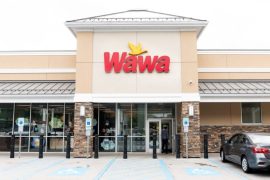
    Before the pandemic, fast-food chains started seeing a new rival for their breakfast customers: convenience stores. Regional chains like Wawa in the Northeast and Casey’s General Store in the Midwest were expanding their reach and investing in their foodservice options, taking pages from the fast-food companies’ own playbooks.

    For a time, lockdowns and the shift to hybrid work reversed those market share gains. But in the three months ended in July, food-forward convenience stores once again gained the upper hand in the battle to serve consumers breakfast, according to Portalatin.

    Circana separates food-forward convenience stores like Buc-ee’s and Sheetz from the broader industry, although more chains may soon fit under that umbrella. 7-Eleven, the biggest convenience, or c-store, in the U.S., is planning to invest more in its prepared foods business, inspired by the success of its Japanese business. C-store chain RaceTrac on Wednesday announced that it’s buying Potbelly for about $566 million, although it’s unclear what its plans for the sandwich chain include beyond expanding its footprint.

    In recent years, more diners have been watching their budgets, conscious of rising menu prices and a tight job market.

    Year-over-year morning traffic to fast-food chains has fallen every quarter for the last three years, according to data from Revenue Management Solutions, which advises restaurants on how to increase sales and profits. In the second quarter, fast-food breakfast visits fell 8.7%.

    To see the struggles, look no further than McDonald’s, which dominates the quick-service breakfast category.

    ″The breakfast daypart is the most economically sensitive daypart, because it’s the easiest daypart of a stressed consumer to either skip breakfast or choose to eat breakfast at home,” McDonald’s CEO Chris Kempczinski said on the company’s earnings call in late July. “And we, as well as the rest of the industry, are seeing that the breakfast daypart is absolutely the weakest daypart in the day.”

    McDonald’s morning visits accounted for 33.5% of its traffic in the first half of 2019 but fell to 29.9% in the first half of 2025, according to Placer.ai data. To try to drum up traffic, the chain has included breakfast items in its new Extra Value Meals, including a deal for a Sausage McMuffin with Egg with a hash brown and a small coffee for $5.

    To reverse breakfast’s slide, fast-food chains are taking hints from their competition. After years of convenience stores looking to fast-food chains for ideas on how to grow prepared food sales, from installing ordering kiosks to new menu items, the dynamic has flipped.

    ″[Quick-service restaurants] are looking at late-night sales and early morning sales, and they are directly looking at convenience stores and saying, ‘What is working? How can we bring that to our stores?’” National Association of Convenience Stores spokesperson Jeff Lenard told CNBC.

    Prepared foods have offered a lifeline for convenience stores as demand for gasoline, tobacco and lottery tickets has fallen over time. The industry’s overall foodservice sales reached $121 billion in 2024, according to data from the NACS.

    Most customers visit the gas pump during the morning and evening rush hours, on their way to and from work, presenting the perfect opportunity for c-stores to sell them breakfast or dinner. This year, 72% of consumers surveyed by InTouch Insight said they saw c-stores as a real alternative to fast-food chains, up from 56% a year ago and 45% two years ago.

    Broadly, the c-stores that have focused on fresh food have been winning over more customers.

    For example, Wawa has seen its customer base grow by 11.5% since 2022, while fast-food chains McDonald’s, Burger King and Wendy’s have seen their combined customer base shrink 3.5% in the same time, according to data from Indagari, a transaction data analytics firm.

    The majority of 1,170 respondents to an InTouch Insight survey for CNBC said that they have purchased made-to-order breakfast from a c-store in the morning in the past three months. Forty-eight percent of respondents said that when they choose breakfast from a convenience store, they are replacing a visit that they might otherwise make to a fast-food restaurant like McDonald’s or Dunkin’.

    Buying coffee and breakfast from a c-store likely won’t be cheaper than making it at home. But consumers perceive it as “good bang for their buck,” according to Sarah Beckett, vice president of sales and marketing for InTouch Insight.

    Plus, c-store customers get a wider breadth of options. In addition to coffee, gas stations sell energy drinks, protein shakes and yogurt smoothies. And customers can pick up a granola bar or banana to accompany their breakfast sandwich. Fast-food chains lack that kind of variety.

    But above all, what matters to consumers is the food itself.

    “While [a] convenience store broadly does have some tailwind from being a lower price point, the ultimate differentiator, and what’s really going to set apart the winners from losers, is that quality aspect of it,” Circana’s Portalatin said.

    Brady Caviness, a 33-year-old account executive at Bailiwick who lives in Minneapolis, told CNBC that he indulges in a breakfast pizza from Casey’s General Store when he’s traveling. If he’s back home, where there isn’t a Casey’s nearby, he’ll stop by McDonald’s, Dunkin’ or Starbucks if he’s in the mood to buy his breakfast.

    The Iowa-based chain is the country’s third-largest c-store chain and claims to be the fifth-largest pizza concept based on its number of locations. Casey’s reported same-store sales growth of 5.6% for its prepared food and dispensed beverages for the three months ended July 31.

    Like Taco Bell’s Mexican Pizza, Casey’s breakfast pizza, topped with cheese, scrambled eggs and a choice of bacon, sausage or vegetables, has grown a cult following since its launch in 2001.

    “I think Casey’s is kind of a unique thing,” Caviness said. “My whole life, I’ve had the Egg McMuffins.”

    This post appeared first on NBC NEWS

  • Trump administration ramps up pressure on Labor Department with data probe

    Trump administration ramps up pressure on Labor Department with data probe

    The Labor Department has announced an inquiry into the Bureau of Labor Statistics over recent changes to its data practices.

    In a letter published Wednesday, the office of the inspector general for the Labor Department cited the BLS’ recent decision to reduce data collection activities for two key inflation reports, as well as the large downward revision in employment estimates it announced Tuesday. It said it is reviewing the ‘challenges’ the agency has faced ‘in collecting and reporting closely watched economic data.’

    The probe comes one month after President Donald Trump fired the head of the BLS as part of a broader pressure campaign that critics say has risked politicizing a part of the government that has long played a crucial role in the business world. The BLS, which is tasked with collecting data on economic indicators such as jobs and inflation, had generally been left alone by previous administrations.

    But Trump began zeroing in on the BLS as his frustrations with the Federal Reserve mounted, coinciding with economic numbers that started to warn about a broader U.S. slowdown.

    Since then, the labor market has slowed considerably. Just before the head of the BLS was fired, the department released a weaker-than-expected jobs report, citing claims of data manipulation that critics say are unfounded.

    Federal Reserve Chair Jerome Powell, another frequent target of Trump’s, has said Fed policymakers are ‘getting the data that we need to do our jobs’ and stressed the importance of the federal statistical agencies.

    ‘The government data is really the gold standard in data,’ he added. ‘We need it to be good and to be able to rely on it.’

    Trump then nominated E.J. Antoni, an economist with the far-right Heritage Foundation, as the new head of the BLS, a move many economists have criticized.

    Trump and other BLS critics have focused on the department’s revisions to its reports, a practice that dates back decades and has been generally seen as a necessary part of the challenge of collecting near-term economic data. It has also faced other challenges in data collection, including budget challenges and low response rates to its collection efforts.

    The BLS previously said the decision to reduce inflation data surveys was necessary given existing budget constraints. Meanwhile, mainstream economists say the latest downward revisions — while large — are part of a routine annual process known as benchmarking.

    While response rates to the bureau’s surveys have been declining, researchers recently found that revisions and falling response rates did not reduce the reliability of the jobs and inflation reports.

    This post appeared first on NBC NEWS

  • Kenvue stock drops 10% on report RFK Jr. will link autism to Tylenol use during pregnancy

    Kenvue stock drops 10% on report RFK Jr. will link autism to Tylenol use during pregnancy

    Shares of Kenvue fell more than 10% on Friday after a report that Health Secretary Robert F. Kennedy Jr. will likely link autism to the use of the company’s pain medication Tylenol in pregnant women.

    HHS will release the report that could draw that link this month, The Wall Street Journal reported on Friday.

    That report will also suggest a medicine derived from folate — a water-soluble vitamin — can be used to treat symptoms of the developmental disorder in some people, according to the Journal.

    In a statement, an HHS spokesperson said, “We are using gold-standard science to get to the bottom of America’s unprecedented rise in autism rates.”

    “Until we release the final report, any claims about its contents are nothing more than speculation,” they added.

    Tylenol could be the latest widely used and accepted treatment that Kennedy has undermined at the helm of HHS, which oversees federal health agencies that regulate drugs and other therapies. Kennedy has also taken steps to change vaccine policy in the U.S., and has amplified false claims about safe and effective shots that use mRNA technology.

    Kennedy has made the disorder a key focus of HHS, pledging in April that the agency will “know what has caused the autism epidemic” by September and eliminate exposures. He also said that month that the agency has launched a “massive testing and research effort” involving hundreds of scientists worldwide that will determine the cause.

    In a statement, Kenvue said it has “continuously evaluated the science and [continues] to believe there is no causal link” between the use of acetaminophen, the generic name for Tylenol, during pregnancy and autism.

    The company added that the Food and Drug Administration and leading medical organizations “agree on the safety” of the drug, its use during pregnancy and the information provided on the Tylenol label.

    The FDA website says the agency has not found “clear evidence” that appropriate use of acetaminophen during pregnancy causes “adverse pregnancy, birth, neurobehavioral, or developmental outcomes.” But the FDA said it advises pregnant women to speak with their health-care providers before using over-the-counter drugs.

    The American College of Obstetricians and Gynecologists maintains that acetaminophen is safe during pregnancy when taken as directed and after consulting a health-care provider.

    Some previous studies have suggested the drug poses risks to fetal development, and some parents have brought lawsuits claiming that they gave birth to children with autism after using it.

    But a federal judge in Manhattan ruled in 2023 that some of those lawsuits lacked scientific evidence and later ended the litigation in 2024. Some research has also found no association between acetaminophen use and autism.

    In a note on Friday, BNP Paribas analyst Navann Ty said the firm believes the “hurdle to proving causation [between the drug and autism] is high, particularly given that the litigation previously concluded in Kenvue’s favor.”

    This post appeared first on NBC NEWS

  • Mortgage rates see biggest one-day drop in over a year

    Mortgage rates see biggest one-day drop in over a year

    The average rate on the 30-year fixed mortgage dropped 16 basis points to 6.29% Friday, according to Mortgage News Daily, following the release of a weaker-than-expected August employment report.

    It’s the lowest rate since Oct. 3 and the biggest one-day drop since August 2024. Rates are finally breaking out of the high 6% range, where they’ve been stuck for months.

    “This was a pretty straightforward reaction to a hotly anticipated jobs report,” said Mortgage News Daily Chief Operating Officer Matt Graham. “It’s a good reminder that the market gets to decide what matters in terms of economic data, and the bond market has a clear voting record that suggests the jobs report is always the biggest potential source of volatility for rates.”

    Graham said in a post on X that many lenders are “priced better” than Oct. 3 and would be quoting in the high 5% range.

    The drop is a major change from May, when the rate on the 30-year fixed peaked at 7.08%. It’s big for buyers out shopping for a home today, especially given high home prices.

    Take, for example, someone purchasing a $450,000 home, which is just above August’s national median price, using a 30-year fixed mortgage with a 20% down payment. Not including taxes or insurance, the monthly payment at 7% would be $2,395. At 6.29%, that payment would be $2,226, a difference of $169 per month.

    That might not sound like a lot to some, but it can mean the difference in not just affording a home, but qualifying for a mortgage.

    Homebuilder stocks reacted favorably Friday, with names like Lennar, DR Horton and Pulte all up roughly 3% midday. Homebuilding ETF ITB has been running hot for the last month as rates slowly moved lower. It’s up close to 13% in the past month.

    The big question is whether the drop in rates will be enough to get homebuyers back in the market.

    Mortgage demand from homebuyers, an early indicator, have yet to respond to gradually improving rates. Applications for a mortgage to purchase a home last week were 6.6% lower from four weeks before, according to the Mortgage Bankers Association.

    “Homebuyers grapple with a lack of affordability, sellers contend with more competition, and builders deal with lower buyer demand,” Danielle Hale, chief economist at Realtor.com, said Friday in a statement after the release of the August employment report. “These conditions haven’t spelled catastrophe, but have created a cruel summer for the housing market.”

    Some analysts have argued that buyers need to see mortgage rates in the 5% range before it really makes a difference. Home prices remain stubbornly high, and while the gains have definitely cooled, they are not yet coming down on a national level. In addition, uncertainty about the state of the economy and the job market has left many would-be buyers on the sidelines.

    This post appeared first on NBC NEWS
  • Paramount mandates 5-day-a-week return to office ahead of major cost cuts

    Paramount mandates 5-day-a-week return to office ahead of major cost cuts

    David Ellison continues to put his stamp on Paramount after its acquisition by Skydance.

    The CEO and chairman told employees Thursday that they will be expected to work in the office five days a week starting Jan. 5, 2026, according to a memo obtained by CNBC. Employees who do not wish to make the transition can seek a buyout starting Thursday and until Sept. 15.

    “To achieve what we’ve set out to do — and to truly unlock Paramount’s full potential — we must make meaningful changes that position us for long-term success,” Ellison wrote to staffers. “These changes are about building a stronger, more connected, and agile organization that can deliver on our goals and compete at the highest level. We have a lot to accomplish and we’re moving fast. We need to all be rowing in the same direction. And especially when you’re dealing with a creative business like ours, that begins with being together in person.”

    The move could help Paramount thin the herd ahead of looming staffing cuts.

    Variety reported last month that the company is expected to lay off between 2,000 and 3,000 employees as part of its postmerger cost-cutting measures. These cuts are slated for early November, Variety reported.

    Paramount is looking to take $2 billion in costs out of the conglomerate amid advertising losses and industrywide struggles with traditional cable networks.

    Phase one of Ellison’s back-to-work plan will see employees in Los Angeles and New York returning to a full five-day workweek in the new year.

    Phase two will focus on offices outside LA and New York, including international locations. A similar buyout program will be offered in 2026 for those who operate in these locations.

    “We recognize this represents a significant change for many, and we’re committed to supporting you throughout this transition,” Ellison wrote. “We will work closely with managers to ensure you have the time and flexibility to make the necessary adjustments.”

    This post appeared first on NBC NEWS
  • Disney to pay $10 million to settle FTC complaint over collection of children’s data on YouTube

    Disney to pay $10 million to settle FTC complaint over collection of children’s data on YouTube

    The Walt Disney Company will pay $10 million to settle Federal Trade Commission allegations that it enabled the unlawful collection of children’s personal data on YouTube.

    The FTC claimed the company allowed data to be collected from kids who viewed videos directed at children on YouTube without notifying parents or obtaining their consent.

    The complaint alleged that Disney violated the Children’s Online Privacy Protection Rule by not labeling some YouTube videos as being made for children. The agency claimed the company was able to collect data from viewers of child-directed content who were under the age of 13 and use it for targeted advertising.

    In 2019, after a settlement with the FTC, YouTube began requiring content creators to list whether uploaded videos were “made for kids” or “not made for kids.” The designation ensures that personal information is not collected from the “made for kids” videos and personalized ads will not be served to viewers. Comments are also disabled on those videos.

    The proposed settlement would require Disney to pay a $10 million civil penalty, comply with the children’s data protection rule and implement a program to review whether videos posted to YouTube should be designated as “made for kids.”

    “Supporting the well-being and safety of kids and families is at the heart of what we do,” the company said in a statement obtained by CNBC. “This settlement does not involve Disney owned and operated digital platforms but rather is limited to the distribution of some of our content on YouTube’s platform. Disney has a long tradition of embracing the highest standards of compliance with children’s privacy laws, and we remain committed to investing in the tools needed to continue being a leader in this space.”

    Axios was the first to report the settlement.

    This post appeared first on NBC NEWS

  • U.S. judge orders Google to share search data with competitors

    U.S. judge orders Google to share search data with competitors

    Alphabet’s Google must share data with rivals to open up competition in online search, a judge in Washington ruled on Tuesday, while rejecting prosecutors’ bid to make the internet giant sell off its popular Chrome browser and Android operating system.

    Google CEO Sundar Pichai expressed concerns at trial in the case in April that the data-sharing measures sought by the U.S. Department of Justice could enable Google‘s rivals to reverse-engineer its technology.

    Google has said previously that it plans to file an appeal, which means it could take years before the company is required to act on the ruling.

    U.S. District Judge Amit Mehta also barred Google from entering into exclusive agreements that would prohibit device makers from preinstalling rival products on new devices.

    Google had argued that loosening its agreements with device makers, browser developers and mobile network operators was the only appropriate remedy in the case. Its most recent deals with device makers Samsung Electronics and Motorola and wireless carriers AT&T and Verizon allow them to load rival search offerings, according to documents shown at trial in April.

    The ruling results from a five-year legal battle between one of the world’s most profitable companies and its home country, the U.S., where Mehta ruled last year that the company holds an illegal monopoly in online search and related advertising.

    At a trial in April, prosecutors argued for far-reaching remedies to restore competition and prevent Google from extending its dominance in search to artificial intelligence.

    Google said the proposals would go far beyond what is legally justified and would give away its technology to competitors.

    In addition to the case over search, Google is embroiled in litigation over its dominance in other markets.

    The company recently said it will continue to fight a ruling requiring it to revamp its app store in a lawsuit won by “Fortnite” maker Epic Games.

    And Google is scheduled to go to trial in September to determine remedies in a separate case brought by the Justice Department where a judge found the company holds illegal monopolies in online advertising technology.

    The Justice Department’s two cases against Google are part of a larger bipartisan crackdown by the U.S. on Big Tech firms, which began during President Donald Trump’s first term and includes cases against Meta Platforms, Amazon and Apple.

    This post appeared first on NBC NEWS

  • Rhode Island’s ‘Taylor Swift Tax’ on vacation homes of the wealthy is spreading to other states

    Rhode Island’s ‘Taylor Swift Tax’ on vacation homes of the wealthy is spreading to other states

    A new push by states to tax the real estate of the wealthy has sparked a backlash among brokers and potential buyers, who say the taxes punish the most important local spenders.

    From tax hikes on pricey second homes in Rhode Island and Montana to Cape Cod’s proposed transfer tax on homes over $2 million and the L.A. mansion tax, state and local governments see a revenue gold mine in the pricey properties of the wealthy.

    “It’s a smack in the face to people who just spend money here,” said Donna Krueger-Simmons, sales agent with Mott & Chace Sotheby’s International in Watch Hill, Rhode Island.

    The tax hikes are being driven by tighter state budgets and populist anger over housing costs. States are looking to offset budget cuts expected from the new tax and spending bill in Washington. At the same time, the housing market has become a tale of two buyers, with the middle class and younger families struggling to afford homes while the luxury housing market thrives from wealthy all-cash buyers.

    The solution for many states: tax the homes of the rich.

    Rhode Island’s new levy, nicknamed “The Taylor Swift Tax,” is among the most extreme. The popstar bought a beach house in the state’s elite Watch Hill community in 2013.

    The measure imposes a new surcharge on second homes valued at more than $1 million. For non-primary residences, or those not occupied for more than 182 days a year, the state will charge $2.50 for every $500 in assessed value above the first $1 million. That charge is on top of existing property taxes and will add up to big increases for luxury homes in Newport, Watch Hill and other well-heeled, summer communities in the state.

    A version of this article appeared in CNBC’s Inside Wealth newsletter with Robert Frank, a weekly guide to the high-net-worth investor and consumer. Sign up to receive future editions, straight to your inbox.

    Swift’s house, for instance, is assessed at around $28 million, according to local real estate records. Her current property taxes are estimated at around $201,000 a year. The new charges will add another $136,442 to her annual taxes, bringing her yearly total to $337,442 — even though locals say she rarely visits.

    Real estate brokers say the increase targets the very taxpayers who already contribute the most. Wealthy second-homeowners pay hefty property taxes but don’t use many local services, since their primary residences are in New York; Boston; Palm Beach, Florida; or other locales. Their kids typically don’t attend the local schools, and they’re infrequent users of the police, fire, water and other municipal services since most stay for only 10 to 12 weeks out of the year.

    “These are people who just come here for the summer, spend their money and pay their fair share of taxes,” said Krueger-Simmons. “They’re getting penalized just because they also live somewhere else.”

    Brokers and longtime residents say the summer residents of Newport, Watch Hill and other seasonal beach towns are the economic engines for local businesses, restaurants and hotels.

    “You’re just hurting the people who support small business,” said Lori Joyal, of the Lila Delman Compass office in Watch Hill. “You’re chasing away the people who spend most of the money in these towns.”

    Rhode Island is also hiking its conveyance tax on luxury real estate starting in October. The tax on real estate sales will be an additional $3.75 for each $500 paid above $800,000 for a real estate purchase. At the same time, the state’s steep estate tax deters many of the ultra-wealthy from living there full-time.

    Brokers say some second-home owners are considering selling and many would-be buyers are pausing their purchases. While the tax hike alone isn’t expected to lead to any significant wealth flight, Joyal said potential buyers in Rhode Island are already looking at coastal towns in Connecticut as alternatives.

    “It’s always about choices,” she said. “At the end of the day it’s about how they can choose to spend their discretionary dollars. Connecticut has some beautiful coastal towns without some of these other high taxes.”

    Montana has passed a similar tax. The influx of Californians and other affluent newcomers who poured into the state during Covid has led to soaring home prices and growing resentment over gentrification. Meanwhile, the state’s low income tax rate and lack of a sales tax has left it little room for revenue increases to handle the necessary increase in services.

    In May, the state passed a two-tier property tax plan, lowering rates for full-time residents and raising taxes on second homes and short-term rentals. For primary residences and long-term rentals valued at or below the state’s median home price, the tax rate will be 0.76%. Homes worth more than that will face a tiered-rate system of up to 1.9% on any value over four times the median price.

    The Montana Department of Revenue expects the changes, which will start next year, will hike second-home taxes by an average of 68%. Brokers say some buyers are waiting to see the tax bills next year before making any decisions about whether to buy or sell.

    “I’ve heard about some buyers who have put on the brakes to wait for the dust to settle and see what happens,” said Valerie Johnson, with PureWest Christie’s International Real Estate in Bozeman, Montana.

    Johnson said that while the tax was touted by legislators as hitting wealthy second-home owners, it will also hit longtime locals who own investment homes and rent them out for income.

    “These are small businesses for many people,” she said.

    Manish Bhatt, a senior policy analyst at the Tax Foundation, said tax hikes aimed at wealthy second-home owners may be popular politically, but they rarely make for successful or efficient tax policy. Real property tax reform should be broad based, rather than focused on taxpayers who are singled out just because they don’t live in a community full-time, he said.

    “There is a grab to find revenue right now,” he said. “But taxing second-home owners could have the opposite impact — dissuading people from owning a second home or continue to own in those communities.”

    While the new taxes alone might not drive out the wealthy, “we do know that taxes are important to businesses and individuals and could cause people to make a decision to buy in another nearby state,” Bhatt said.

    The projected revenue from the new taxes may also disappoint. When Los Angeles passed its so-called “mansion tax” in 2022, proponents touted revenue projections of between $600 million to $1.1 billion a year. The tax, imposed on real estate sales over $5 million, has only raised $785 million after more than two years, according to the Los Angeles Housing Department.

    Higher interest rates that hurt the housing market have played a role, experts say. Yet Michael Manville, professor of urban planning at the UCLA Luskin School of Public Affairs, said wealthy buyers and sellers also reduced transactions in response to the tax.

    “The lower revenue is a reason to be concerned because it suggests that the tax might actually be reducing transactions, which in turn can reduce housing production and property tax revenue,” he said.

    This post appeared first on NBC NEWS